Updated on by Rita Moreira
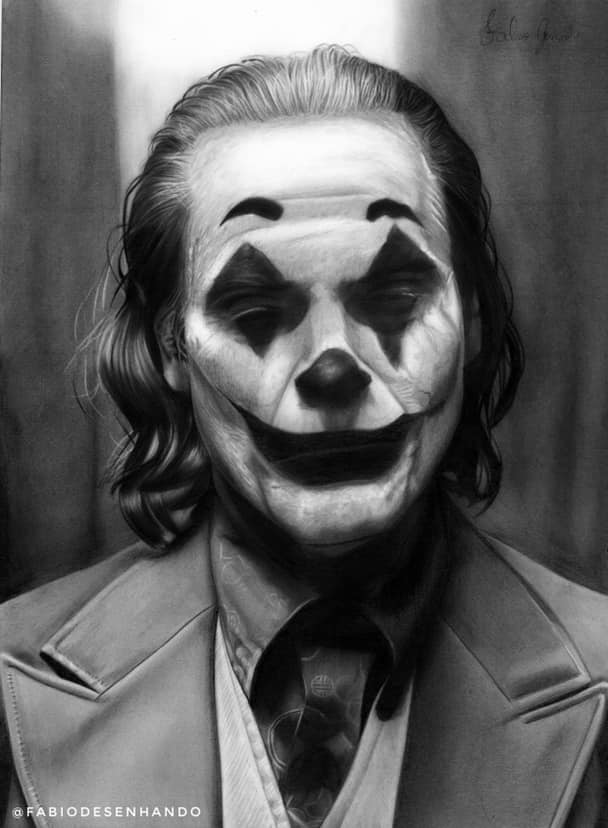
Dirk Dzimirsky is one of the names that comes up whenever people argue about how far a pencil can really be pushed. His faces look less like drawings and more like photographs that somehow breathe, which is exactly why beginners find him equal parts inspiring and slightly terrifying.
In this profile I want to look at who he is, what makes his work so convincing, and what you can borrow from his approach without needing decades at the drawing board. If hyperrealism appeals to you, his portraits are a quiet masterclass in patient looking.
Who is Dirk Dzimirsky?
Dirk Dzimirsky is a German artist, born in 1969, best known for hyperrealistic portraits made with graphite pencils and paint. He works almost entirely with the human face, capturing wet skin, glassy eyes and single stray hairs so faithfully that the finished piece seems to breathe. Largely self-taught, he treats each drawing as an exercise in looking harder.
Art databases such as MutualArt list him simply as “German, 1969”, and that plainness suits him. He is not a showman: the work does the talking. When I show his drawings to my own students, the first reaction is usually silence, followed by “that cannot be a pencil”. It is, and that is the point.
What is hyperrealism in pencil drawing?
Hyperrealism in pencil drawing means using only graphite or charcoal to reproduce a subject with photographic accuracy, then pushing a little past the photo into heightened texture, light and presence. It grew out of Photorealism, the movement the Tate defines as painting that reproduces a photograph as precisely as possible.
The difference is one of intent. Photorealism copies the photograph faithfully, while hyperrealism, as the reference on the movement puts it, adds emotion and a heightened, almost cinematic focus. Dzimirsky sits firmly in the second camp: his portraits feel more alive than the reference ever was.
| Aspect | Photorealism | Hyperrealism |
|---|---|---|
| Goal | Copy the photo | Push past the photo |
| Feeling | Neutral, cool | Charged, emotional |
| Detail level | High | Extreme, pore by pore |
If you are still working out where you fit, my guide to hyperrealistic pencil drawing walks through the whole idea from the beginning, and it pairs well with this profile.
What makes Dirk Dzimirsky’s drawings so convincing?
The short answer is values, not tricks. Dzimirsky reads a face as a landscape of light and shadow rather than a set of features, so the skin, the eyes and the hair all sit in the same believable space. A single graphite portrait can take hundreds of hours, and that time goes almost entirely into tone.
Look closely and you see the small decisions that sell the illusion: the soft blur where a jaw turns away, the sharp catchlight in a wet eye, the faint sheen on a lower lip. When I teach skin, the mistake I see most is drawing every pore the same darkness. Dzimirsky never does that: he lets whole areas stay quiet so the busy passages have somewhere to breathe.
Two of his signatures are worth studying on their own. His command of light and shadow is what gives a flat sheet of paper real volume, and his handling of skin texture is close to unbeatable. If eyes are your weakness, his catchlights are a lesson in themselves, and my walkthrough on drawing a realistic eye breaks that down step by step.
What can you actually learn from his approach?
You can learn a great deal, as long as you copy the habits rather than the finished pieces. Hyperrealism is not a natural gift that Dzimirsky was born with: it is thousands of hours of careful observation, and observation is a skill you can practise. Here is the order I suggest to my own students.
- Master proportion and simple light and shadow on plain objects before you touch a face.
- Train yourself to draw exactly what is there, not what you assume is there, which is the heart of drawing what you see.
- Build a full range of tones, from the palest grey to the deepest black, and keep them under control.
- Work in long, patient sessions, and accept that the first year or two will feel frustrating.
- Ask for honest feedback from people who will actually tell you the truth.
That last point matters more than any pencil. Progress in realism comes from seeing your own errors, and the flip test (turning the drawing upside down or in a mirror) is the fastest way to catch them. If you want a wider plan, my notes on getting better at drawing gather the habits that carry a beginner towards work like this.
What materials suit this kind of work?
Nothing exotic, which surprises people. Hyperrealism rewards deep knowledge of a few tools far more than an expensive kit: a range of graphite pencils, a smooth heavyweight paper (roughly 200gsm or more with a fine tooth), and a putty rubber (kneaded eraser) for lifting soft highlights. A master with modest tools will always beat a beginner with the priciest set.
In the UK you can find everything in one trip to Jackson’s Art, Cass Art or Hobbycraft, and Amazon.co.uk carries the same graphite ranges if you prefer to shop from the sofa. If you are choosing a first set, my picks for the best pencils for realistic drawing and the best paper for drawing will save you a few wasted purchases.
Frequently Asked Questions
What is Dirk Dzimirsky known for?
Dirk Dzimirsky is known for hyperrealistic portraits that make graphite look like photography. His trademark is the human face rendered with startling texture: wet eyes, damp skin, and hair drawn strand by strand, often with water droplets or a glassy sheen.
He builds this effect through tonal control rather than gimmicks, letting some areas stay soft so the sharp details carry real weight. That balance of restraint and precision is what separates his work from a straight copy of a photo, and it is why he is so often cited when people discuss hyperrealism.
Does Dirk Dzimirsky only draw in pencil?
No, and it is a common assumption. Dzimirsky is celebrated for his graphite drawings, but he also works in paint, applying the same obsessive attention to light and texture on canvas as he does on paper.
For anyone learning, the graphite side is the more useful place to start, because it strips the problem down to pure value: no colour to hide behind, just light and shadow. Master tone in pencil first, and colour becomes far less daunting later. The principles that drive his drawings carry straight over into his painted work.
Where can I see Dirk Dzimirsky’s work?
The clearest window on his current work is his official Instagram, where he posts finished pieces and the occasional work in progress. It is the best way to see the scale and finish that a small photo on a blog can never quite convey.
Beyond that, his drawings and paintings turn up in gallery exhibitions and hyperrealism group shows across Europe and beyond. If a piece appears near you, go and see it in person: the difference between a screen and the real sheet, up close, is genuinely worth the trip.
Did this article help you? You can buy me a coffee so I can keep creating free guides like this one.