Updated on by Rita Moreira
Working out what to charge for a drawing is one of the hardest parts of turning a hobby into paid work. You put time and money into learning the craft, so a fair return is only natural, yet most artists still price out of nerves rather than sums.
Below are five practical tips I give my own students, plus the extra costs that quietly eat your margin if you forget them.
How do you price your art?
To price your art, add up four things: the hours a piece takes, your materials, your overheads (workspace, framing, admin), and a profit margin on top. A simple starting formula is (materials + desired profit) divided by working hours, then adjusted for the complexity of the piece and your reputation in the market.
That formula is a floor, not a ceiling. The bodies that advise UK artists on fees, such as Artists Now (formerly a-n, The Artists Information Company), stress that undercharging spreads across the whole sector, so pricing yourself honestly protects other artists too. Treat the number as a professional decision, not an apology.
1. Assess the complexity of the piece
Always see the reference before you quote. Complexity is the single biggest driver of how long a realistic drawing takes, and a face packed with detail can cost you twice the hours of a simpler one.
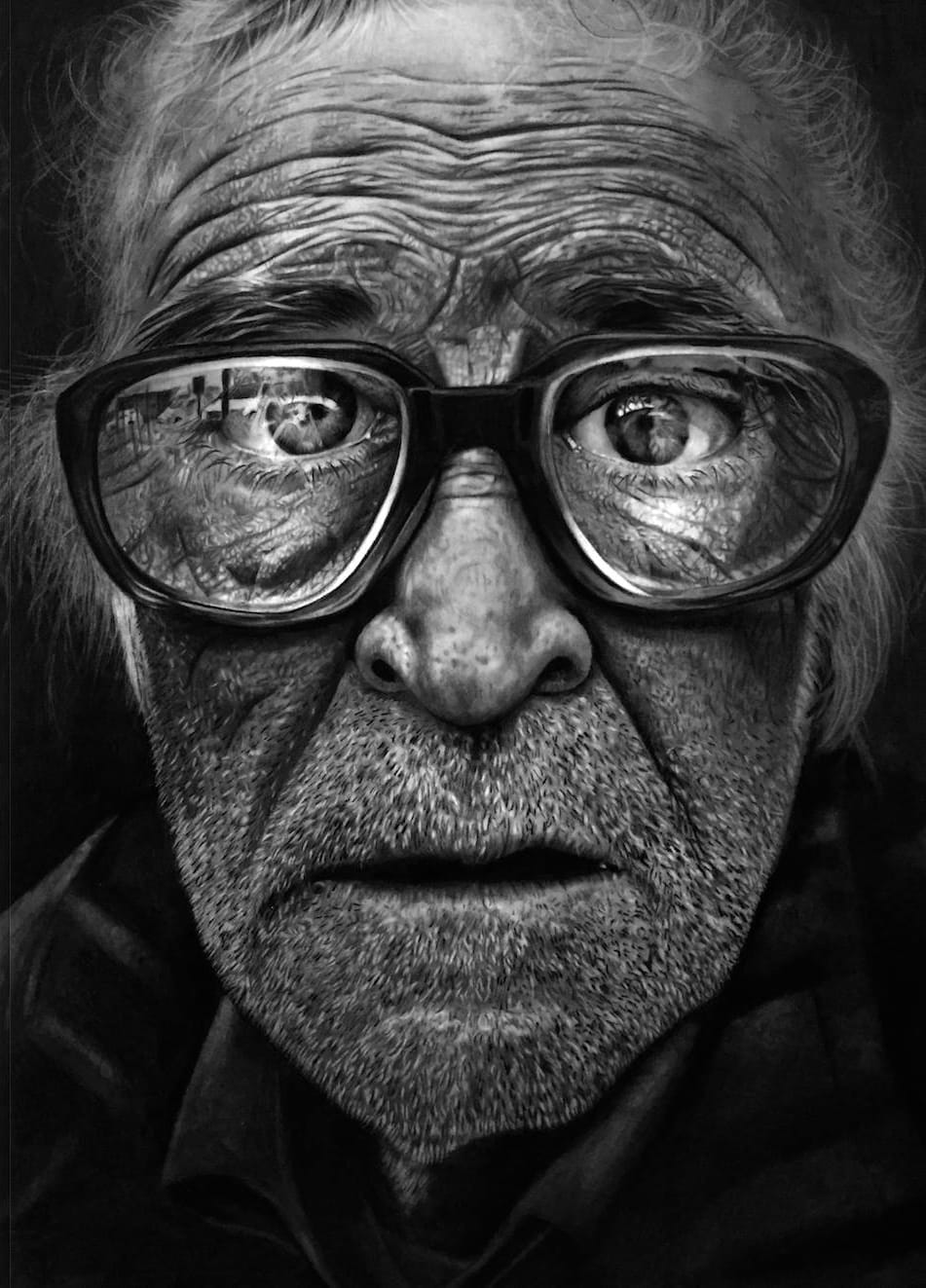
In my own commissions I never give a price before I have seen the photo. A portrait means weighing up the structure of the face, the skin texture, clothing and, above all, the hair, which adds hours on its own. Quote blind and you either lose money or resent the work. Ask for the actual image first, and price what is really in front of you.
2. Value your time
Your time is the raw material you sell, so measure it before you price it. With a bit of practice you learn roughly how many hours each type of piece needs, and that estimate becomes the backbone of every quote.
If commissions are your main income, a loose plan is not optional. I block out fixed drawing hours around the rest of my week and log how long each piece actually takes, then compare that to my guess. Over a few months the gap closes, and I stop underselling work that quietly runs to ten or twelve hours. Charging for talent alone, without counting the clock, is how good artists end up on a poor hourly rate.
3. Build your reputation and add value
Where your work is seen changes what it can command. The same drawing fetches very different prices sold on the street, shown in a gallery, or delivered through a considered private commission.
Reputation is slow to build but it compounds. Choose channels that raise your standing rather than just your visibility: a strong portfolio, a tidy social feed, the occasional charity piece or event. The AOI, which offers contract and business support to illustrators, points out that a clear body of professional work is what lets you justify higher fees. Keeping a record of how you improve, and tracking your art progress over time, gives you the evidence to charge more with a straight face.
4. Know your limits
Be honest about how much you can take on. Overloading your diary to chase income usually backfires as late deliveries and a drop in quality, which does more damage to your name than a quiet month ever would.
Rushed work is risky work. One unhappy client can undo a lot of word of mouth, so price and schedule for the standard you can genuinely deliver, not the one you hope to hit on a good day. It is better to charge a fair rate to fewer people than a low one to a queue you cannot serve properly.
5. Be careful with discounts
Discounts are fine occasionally, but handled badly they quietly tell buyers your prices are soft. Once haggling becomes the conversation, the perceived value of the work slips with it.
A few rules keep discounts from hurting you:
- Do not let negotiation take over the conversation, as it distracts from the value of the piece itself.
- If a discount is unavoidable, always give a reason (for example, “I can take 10% off for payment in advance”) so it reads as an exception, not a default.
- Never slash the price heavily. A client who negotiates aggressively at the start often turns into a difficult one later.
What other costs should you build into the price?
Beyond time, several real costs belong in every quote. Quality materials, framing and even your workspace all have a price, and if you leave them out you are subsidising the client from your own pocket.
I buy my graphite from British makers like Derwent, based in the Lake District since 1832, and you will find their pencils at Cass Art, Jackson’s Art or Hobbycraft, with Amazon.co.uk handy for a quick restock. Those pounds add up across a year. One more hard-won tip: always take a deposit before you start, usually half the total. I have a drawer of finished portraits that clients never came back to collect (and never paid for), which is exactly why I now ask for money up front.
| Cost | What to include | Often forgotten? |
|---|---|---|
| Time | Every working hour, at a set rate | Yes |
| Materials | Pencils, paper, fixative | Sometimes |
| Overheads | Workspace, framing, admin, postage | Yes |
| Margin | Profit on top of costs | Yes |
If you are still finding your feet with the craft itself, it is worth strengthening your core skills alongside your pricing: a confident realistic pencil drawing is far easier to sell than a hesitant one.
Frequently Asked Questions
How do you price art commissions?
Price a commission by the piece, not by a flat rate. Start from your hours multiplied by your hourly figure, add materials and a share of your overheads, then layer on a margin. Adjust for complexity once you have seen the reference.
For a first commission, resist charging rock bottom to win the job, as it damages your standing later. Research what local artists with similar experience charge, count your material costs, and be realistic about hours. A handful of clients paying fairly beats a crowd paying almost nothing.
How do you price artwork for sale?
For finished work sold as an original, cover your costs first, then price for the value the buyer sees. Add up materials, framing and the hours the piece took, apply your margin, and check that number against comparable originals from artists at your level.
Context matters as much as the sum. The same drawing can command more in a gallery than sold online, simply because the setting signals quality. Keep your pricing consistent within each channel so buyers never feel the number is arbitrary.
How do you price art prints?
Price prints on a different logic from originals, because the cost per copy is low but the value is spread across an edition. Work out your printing and packaging cost per print, add postage, then set a margin that keeps the print affordable while protecting the value of the original.
Smaller, limited editions can carry a higher price than open ones, as scarcity adds perceived value. Whatever you decide, keep originals clearly dearer than prints, so collectors always understand what they are paying a premium for.
Did this article help you? You can buy me a coffee so I can keep creating free guides like this one.