Updated on by Rita Moreira
Plenty of people write to us saying the same thing: they draw every day, watch the tutorials, buy decent materials, and still feel like they are standing still. The frustration is real, and it almost always arrives wrapped in the idea that they simply lack talent. That is rarely the problem.
After years of watching students at every level, the pattern is clear: the bottleneck is not the number of hours or the price of the pencils. It is one quiet skill that almost nobody trains on purpose, and it decides whether all that practice turns into progress or into a very well-rehearsed dead end.
What a drawing plateau really is
A drawing plateau is the stage where your work stops visibly improving even though you keep drawing regularly. It rarely means you have run out of talent. In almost every case the sticking point is perception: your hand has learned to repeat what it already knows, while your eye has stopped comparing the drawing to the reference closely enough to catch what is off.
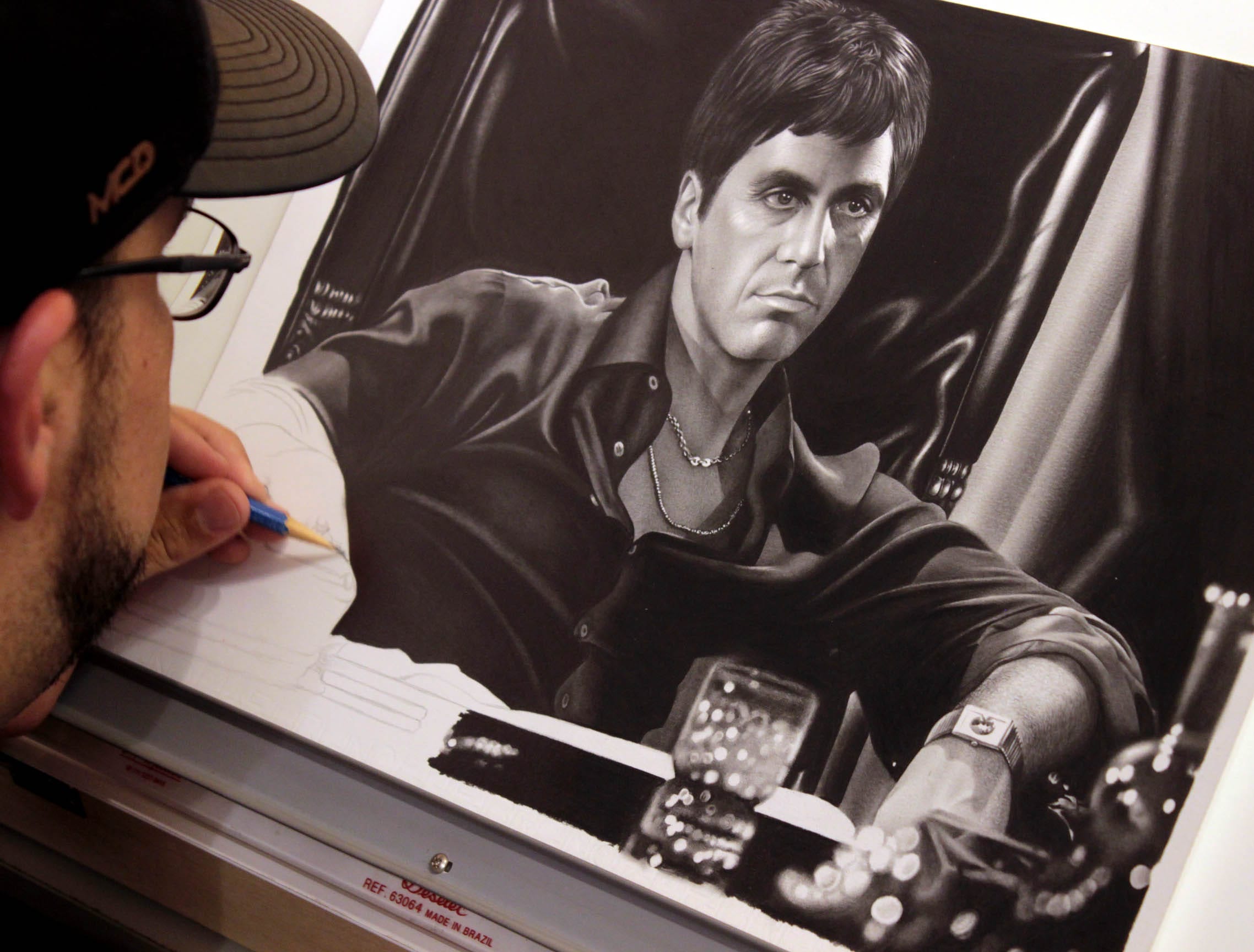
Perception, in realistic drawing, is the trained ability to see the reference as it actually is rather than as memory suggests. It means comparing tones, measuring proportions, spotting the edge of a shadow and judging what is light, dark, near or far before the pencil even touches the paper. Without that conscious reading, the hand works on autopilot and the drawing stalls. Learning to draw from what you see, through honest observation rather than memory, is the single change that moves most people off the plateau.
Why practice on its own stops paying off
Practice and dedication matter, but on their own they are not enough. Repeating the same mistake for a hundred hours does not become skill; it becomes visual stubbornness. For practice to turn into progress it has to come with an understanding of what you are actually doing, which is why two artists with the same study time can end up miles apart. One trained the hand. The other trained the hand alongside the eye.
This is the thread that runs through Betty Edwards’ work on seeing rather than symbolising: beginners tend to draw the symbol they hold in their head, not the shape in front of them. When I catch myself doing that, the fix is never more hours. It is to stop before each stroke and ask whether the tone, the size and the position match the reference. If your work has looked the same for months, the next step is to practise with more intention, not simply to draw more.
Anxiety: the quiet enemy of clear seeing
Most students who reach out share the same habit: a rush to see the finished result. That impatience is what tramples perception. The eye cannot compare properly because the hand is already three steps ahead, solving the next area before the current one has been read.
Two small things help disarm that rush. Prepare the space before you start: draw somewhere with fewer distractions, phone out of reach, no pressure to finish today. Realistic drawing asks for quality of time, not volume of it. Second, treat the session like a pause for the mind. If in an hour you only manage the block-in, that is fine. Perception is not trained in a hurry, and calmer sessions are often where I make the sharpest jumps in a piece.
Read the symptom, then change one thing
Being stuck feels vague, but it usually breaks down into a symptom, a cause and a single fix. Matching them is the quickest way to stop drawing more of the same. The table below maps the ones I see most often in students’ work.
| Symptom | Likely cause | What to change |
|---|---|---|
| Work looks the same | Hand repeats while the eye stops comparing | Compare tones side by side before each mark |
| Proportions feel off | Drawing from memory, not observation | Measure and check size against the reference |
| Drawings look flat | Tonal range read too narrowly | Squint and map the light-to-dark values |
| You rush to finish | Anxiety overtakes perception | Slow down and treat the session as a pause |
If flatness is your recurring symptom, it is worth understanding why drawings end up looking flat and how reading light and shadow restores depth.
Shift your eye between each stage
At the end of every stage, put distance between you and the paper. This resets tired eyes and lets the errors surface on their own. Do it deliberately rather than only when you sense something is wrong.
- Stand up, drink some water and look into the distance for a few seconds.
- Come back and view the drawing from roughly a metre away.
- Immediately look at the reference, then let your gaze travel back and forth several times.
- Note the first thing that jumps out: an area too light, a contour out of proportion, a tone that needs reinforcing.
- Fix that one thing, then repeat the comparison before moving on.
That side-by-side comparison is the simplest and most effective exercise for speeding up perception. Turning both images to black and white makes it sharper still, because it strips away colour and leaves only the tonal values you are trying to match.
A method shortens the gap between effort and result
A few people develop perception almost by intuition, with no formal study. They are the exception. Most of us need a method: a structured path that teaches you to look before you draw, to choose the right pencil and to control pressure. The old idea that the amateur needs more talent, when they really need more awareness of what they are seeing, holds up in practice every single time.
That is why outside guidance accelerates things so much, whether it comes from a teacher, a study group or an honest comparison with more experienced artists. The British art tradition frames realistic work clearly too: the Tate defines realism as depicting subjects truthfully, and treats photorealism as pushing that accuracy to its limit, both of which rest entirely on trained observation. If your progress has stalled, review the process before you double the hours: it usually helps to rethink how you improve and to track your progress so you can see the change you cannot feel day to day.
Frequently Asked Questions
How do you get past a drawing plateau?
The fastest way past a drawing plateau is to change how you look, not how much you draw. Slow down before each mark and ask three questions: is this the right tone, the right size and the right position compared with the reference? Step back a metre between stages, then glance at the reference so the differences jump out.
If your progress has stalled for months, review your process rather than doubling your hours. Try one variable at a time, compare, correct on the next page, and let each drawing become a small experiment instead of a repeat.
Why am I stuck at drawing?
Most people get stuck at drawing because they are practising execution while neglecting perception. Repeating the same mark for a hundred hours does not become skill; it becomes a well-rehearsed habit, mistakes included. Two artists with identical study time can end up miles apart: one trained the hand, the other trained the hand and the eye together.
Anxiety about the finished result makes it worse. When you rush to see the drawing done, the eye never gets the quiet it needs to compare tones and proportions. Calmer sessions and honest comparison with the reference usually restart the progress.
Is the art plateau advice on Reddit worth following?
Threads on the art plateau, especially on Reddit, are worth reading for reassurance: they show that stalling is normal and shared, not a sign you lack talent. The most repeated advice there is sound too, focus on fundamentals, use reference and get outside feedback.
Treat it as a starting point rather than a syllabus. Crowd advice can be contradictory and rarely watches you draw, so it cannot spot your specific habit. Pair the encouragement with a clear method and, where you can, feedback from someone more experienced who can point at the exact tone or proportion you keep missing.
Did this article help you? You can buy me a coffee so I can keep creating free guides like this one.