Updated on by Rita Moreira
Every so often a student shows me a careful pencil portrait and then says, almost apologising, that they “only” copied it from a photo. As if that made it less real. I have heard the same worry for years, so let me answer it plainly.
The question of whether working from a photograph is honest goes to the heart of what drawing actually is. It deserves a proper answer, not a shrug.
Is drawing from a photo cheating?
Drawing from a photo is not cheating. A photograph is a reference, in the same way a live model or a bowl of fruit is a reference: it simply gives you something to observe. What matters is how you use it. Copying blindly teaches you very little, but reading a photo with your own eye, judging its tones, edges and proportions, is genuine artistic skill.
The suspicion usually comes from a hidden assumption: that “real” art must be invented from nothing. In practice, almost no one draws from pure imagination. We all draw from a library of images stored in memory, built by years of looking. A reference photo is just that library, made visible in front of you.
Reference, copying and tracing: what’s the difference?
These three words get muddled together, and that is where most of the guilt comes from. Using a reference means observing and deciding for yourself. Blind copying means reproducing marks without understanding them. Tracing means drawing directly over the lines. They are not the same activity, and they do not build the same skills.
| Approach | What you do | Builds observation? | Seen as cheating? |
|---|---|---|---|
| Reference | Look, measure by eye, decide each mark yourself | Yes, strongly | No |
| Blind copy | Reproduce shapes without asking why | Only a little | Not really, but it limits you |
| Tracing | Draw over the lines through the paper | Almost none | Only if you hide it |
The honest line is simple. If you looked at the photo and made every decision with your own hand and judgement, you drew it. If you passed the lines through a sheet of paper, you traced it. I dig into that distinction properly in whether tracing counts as cheating, because the answer there depends entirely on how you use it and whether you are honest about it.
Haven’t artists always worked from images?
Yes, and long before the camera existed. Painters used optical aids for centuries: the camera obscura, described by the National Gallery in London, projected a scene onto a surface so artists could trace or study its proportions. Vermeer and Canaletto are among those thought to have used it. Nobody demotes them for it.
When photography arrived, an entire recognised movement grew out of painting from photographs. Tate defines Photorealism as art that reproduces a photograph in another medium, and Chuck Close built a celebrated career gridding up photographs into vast portraits. That work hangs in major museums. It sits within the wider tradition of Realism, the long effort to represent the world truthfully. If the camera “cheated,” those galleries would be empty.
What turns a photo into your own drawing?
Interpretation is what makes it yours. A printer reproduces a photo more accurately than any human ever will, and faster. Nobody calls a printout art, because there is no person inside it. Your drawing carries choices the photo did not make: what to soften, what to sharpen, where to deepen a shadow, which detail to leave out.
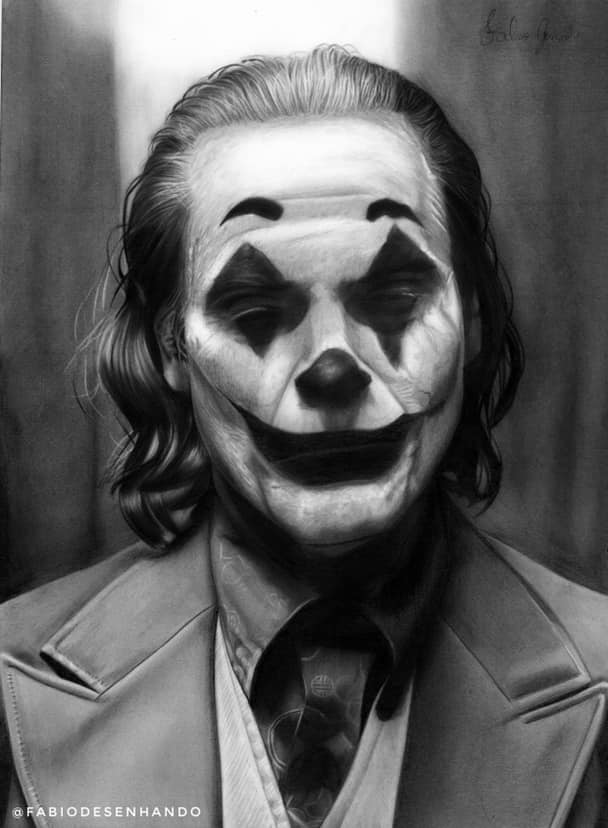
I often compare it to an actor taking on a role. A good actor does not simply repeat lines; they inhabit the character and feel what it feels. When I draw a face from a photo, I am trying to feel what the image gives off and put that back onto the paper. Two artists working from the identical reference will produce two different drawings, because each brings their own perception, sensitivity and hand. That gap between them is the art.
This is also why observation is the skill worth training. Learning to draw what you actually see rather than what you assume is there is the foundation of realistic work, whether your subject is a photo or a person sitting in front of you.
How to use a photo without leaning on it
A reference is a starting point, not a crutch. The trick is to observe actively instead of tracing passively. Here is the approach I teach, and it keeps a drawing honest and your skills growing.
- Choose a strong photo you took or have the right to use, with clear light and shadow.
- Block in the big shapes by eye first, checking proportions against the reference rather than measuring every line.
- Squint at the photo to read its main tonal values, then map them onto your paper.
- Decide what to change: crop the composition, quieten a busy background, push the contrast.
- Step back often and judge your drawing on its own, not just as a match to the photo.
When you want to lift a face beyond a flat likeness, the same observation habits carry into drawing a realistic face. And if you ever wonder whether any of this is really “talent,” it is worth reading why it is mostly a skill you can build, not a gift you are born with.
Frequently Asked Questions
Is it cheating to draw from photographs?
No. A photograph is a reference, no more suspect than a live model or a still life. The photo gives you something to observe, but every mark on the paper is still your decision.
What separates practice from a shortcut is understanding. If you are actively reading the tones, edges and proportions and reproducing them with your own hand, you are training real observation skills. Working from photos is how most realistic artists learn, and how many of them keep working for the rest of their careers.
Is tracing a photo cheating?
It depends on how you use it and whether you are honest about it. Tracing over a photo can be a legitimate tool for transferring a composition or learning proportions quickly, and it has a long history through devices like the camera obscura.
The problem is only twofold. First, tracing on its own barely trains your eye, so leaning on it stalls your progress. Second, presenting a traced image as freehand observational work is dishonest. Use it as a step in your process if you like, but be clear about what you did.
Is tracing cheating in art?
Not automatically. Plenty of respected artists have used tracing, projectors and grids as part of their workflow, and the finished piece is still judged on its own merit. The tradition of working from projected or photographic images stretches back centuries.
The line most artists draw is about transparency and skill. If tracing replaces looking, you never build the observation that realistic drawing rests on. If it is one tool among many, and you are open about it, most of the art world has no objection at all.
Did this article help you? You can buy me a coffee so I can keep creating free guides like this one.