Aktualisiert am von Rita Moreira
Am Anfang habe ich meine Bleistifte einfach durch den nächstbesten Spitzer gedreht und mich gewundert, warum meine Linien nie so fein wurden wie bei den Zeichnungen, die ich bewunderte. Die Wahrheit ist unbequem: Die Spitze entscheidet oft mehr über das Ergebnis als der Bleistift selbst.
In dieser Anleitung zeige ich dir, wie du einen Bleistift richtig anspitzt, welche Methoden es gibt (Messer, Kurbelspitzer, Schleifpapier) und warum die Form der Spitze für realistische Zeichnungen so wichtig ist.
Was heisst einen Bleistift richtig anspitzen?
Einen Bleistift richtig anzuspitzen bedeutet, der Mine eine lange, schlanke Spitze zu geben, die den feinen Strich länger hält und den Graphit präzise auf das Papier legt. Die Form hängt von der Methode ab (Cuttermesser, normaler Spitzer, Kurbelspitzer oder feines Schleifpapier), und jede hinterlässt eine andere Länge, einen anderen Winkel und eine andere Haltbarkeit.
Der Spitzer wechselt seine Bauform, aber die Aufgabe bleibt gleich: Holz und Mine lang und scharf zu halten, damit du mehr Kontrolle über den Strich bekommst. Genau das trennt eine saubere Kontur von einem porösen, groben Ergebnis.
Warum ist eine lange, feine Spitze beim Zeichnen wichtig?
Die Höhe der Spitze steuert, wie schnell sich der Graphit abnutzt. Eine lange Spitze verteilt den Abrieb über eine grössere Strecke, deshalb bleibt der Strich länger fein. Eine kurze, kegelige Spitze sitzt dagegen dicht über dem dicken Holzansatz und wird beim Zeichnen sehr schnell stumpf und breit.
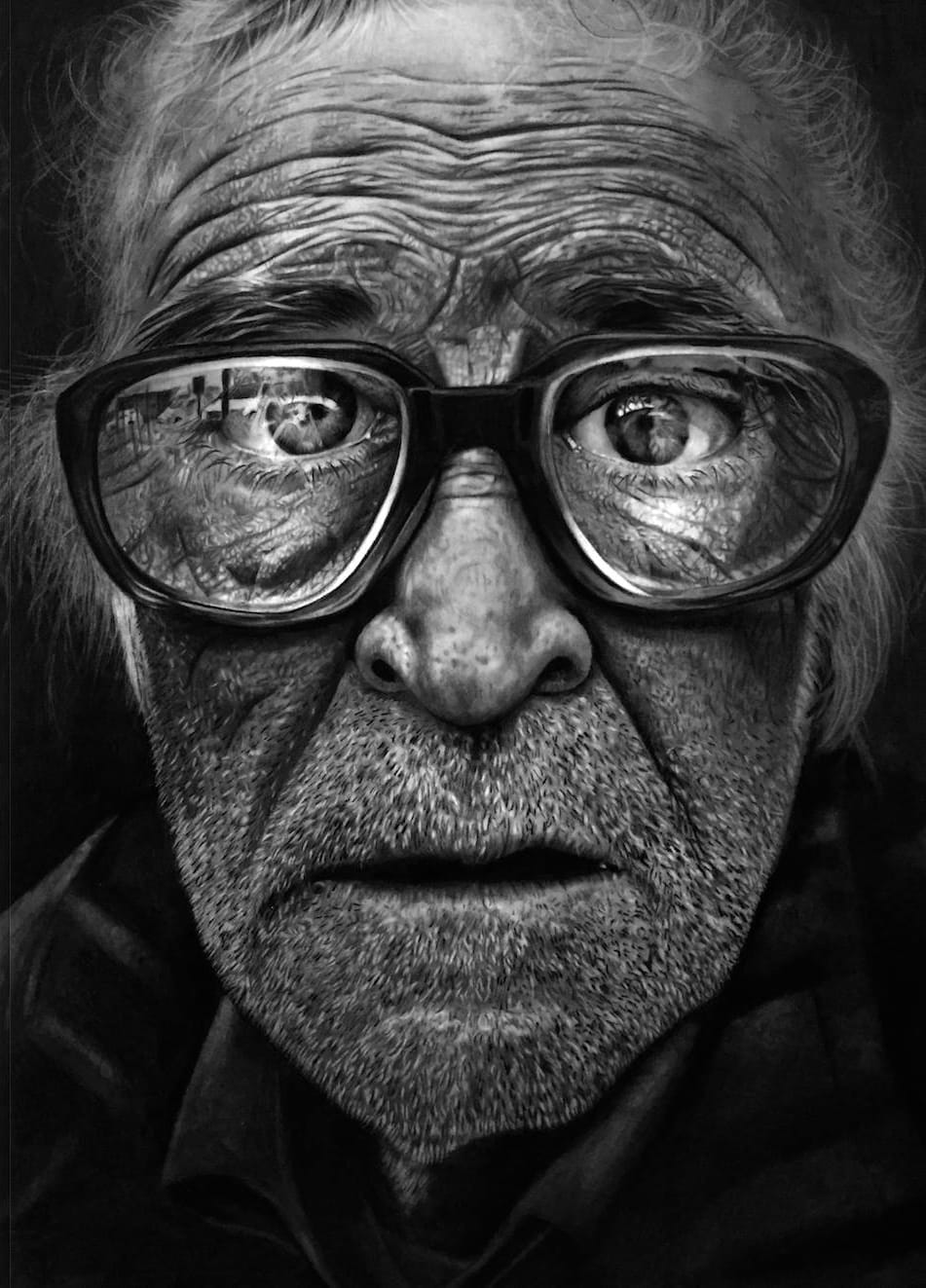
Das merkst du besonders bei Details. Wenn ich Wimpern, einzelne Haare oder Hautporen zeichne, legt eine lange Spitze nur eine schmale Graphitkante auf das Papier und gibt mir die Kontrolle zurück. Eine stumpfe Spitze legt die ganze Flanke der Mine auf, und der Strich schwankt in der Breite, sobald ich den Bleistift kippe. Wer feine Augen realistisch zeichnen will, spürt diesen Unterschied sofort.
Was ich meinen Schülern immer sage: Eine kurze Spitze zwingt dich, ständig nachzuspitzen, und jede Unterbrechung reisst dich aus dem Fluss der Zeichnung. Die lange Spitze ist also nicht nur schöner, sie spart dir Zeit.
Welche Methoden zum Bleistift anspitzen gibt es?
Es gibt vier gängige Wege, einen Bleistift anzuspitzen, und sie liefern bewusst unterschiedliche Ergebnisse. Die meisten Bleistifte kommen bereits ab Werk gespitzt: eine lange, aber nicht besonders scharfe Spitze. Ab da musst du eine Methode wählen, um sie zu erneuern.
| Methode | Spitze | Aufwand | Am besten für |
|---|---|---|---|
| Cuttermesser | Sehr lang, formbar | Hoch | Lange Flächenstriche, Schraffuren |
| Normaler Spitzer | Kurz, konisch | Niedrig | Schnelle Skizzen, unterwegs |
| Kurbelspitzer | Lang, gleichmässig | Mittel | Tägliches Zeichnen am Schreibtisch |
| Schleifpapier | Nadelfein, variabel | Mittel | Feinste Details nach dem Spitzen |
Mit dem Cuttermesser (Skalpell)
Die mit dem Messer geschnittene Spitze ist die längste und hält die feine Kante am längsten. Dafür brauchst du etwas Übung und Geduld, aber diese Zeit bekommst du beim Zeichnen zurück. So gehe ich vor:
- Halte den Bleistift von dir weg und ziehe die Klinge in flachen, kurzen Zügen vom Holz zur Mine.
- Drehe den Bleistift nach jedem Schnitt ein Stück, damit du das Holz gleichmässig rundherum abträgst.
- Lege die Mine auf etwa acht bis zwölf Millimeter frei, deutlich mehr als jeder Spitzer erlaubt.
- Forme die letzte Spitze mit ganz sanften Zügen oder wechsle zum Schleifpapier.
Genau diese lange, freiliegende Mine brauchst du für breite, seitlich geführte Striche, wie sie beim Schattieren grosser Flächen entstehen. Kein rotierender Spitzer bringt die Mine so weit heraus.
Der normale Spitzer
Der klassische Dosen- oder Schulspitzer ist am leichtesten zu bekommen und liefert eine kurze, konische Spitze. Die Mine wird schnell breit und dringt schwerer ins Papier ein, das Ergebnis wirkt rustikaler und poröser. Für schnelle Skizzen oder unterwegs ist er völlig in Ordnung, aber bei feiner Textur musst du sehr oft nachspitzen. Achte darauf, dass die Klinge scharf ist: Eine stumpfe Klinge bricht die Mine eher, als sie zu schneiden.
Der Kurbelspitzer
Der Kurbelspitzer, den du an der Tischkante festklemmst, erzeugt eine lange und gleichmässige Spitze. Das Anspitzen geht schnell und einfach, und für den Alltag am Schreibtisch ist das eine der effizientesten Lösungen. Der einzige Nachteil ist der Preis, der je nach Marke höher liegt. Über die Lebensdauer betrachtet ist das Preis-Leistungs-Verhältnis für mich aber klar in Ordnung, weil das Schneidwerk aus Stahl viele Jahre hält.
Schleifpapier und weitere Werkzeuge
Ein Block mit feinem Schleifpapier (Körnung um 400) ist mein wichtigstes Zusatzwerkzeug. Damit ziehe ich die Mine nach dem Spitzer in eine nadelfeine oder abgeschrägte Form, ganz ohne teures Elektrogerät. Elektrospitzer sind bequem, aber kostspielig und fressen die Bleistifte schneller auf. Für die letzte Verfeinerung reicht ein einfacher Schleifblock fast immer aus.
Welcher Härtegrad passt zu welcher Spitze?
Die Methode entscheidet nicht allein, auch der Härtegrad spielt mit. Weiche Minen wie 6B geben viel Graphit ab und werden schnell stumpf, deshalb profitieren sie am meisten von einer langen Spitze und häufigem Nachziehen auf dem Schleifpapier. Harte Minen wie 2H halten die Spitze lange, brechen aber leichter, wenn du sie mit dem Messer zu dünn schnitzt.
Die Härtegrade folgen einer europäischen Skala von hart (H) bis weich (B). Bei Faber-Castell, seit 1761 in Stein bei Nürnberg, und bei Staedtler aus Nürnberg findest du die klassischen Künstlerreihen (Castell 9000 und Mars Lumograph) in Abstufungen von etwa 4H bis 8B. Für den Einstieg reichen ein HB und ein 4B völlig aus, wie ich auch beim Zeichnen mit Kohle immer betone: erst das Werkzeug beherrschen, dann erweitern.
Eine ganze Palette an Graphitstiften in verschiedenen Härtegraden brauchst du am Anfang nicht. Wichtiger ist, dass du bei jedem Grad die Spitze feinhältst, denn ein stumpfer 2B zeichnet gröber als ein scharf gespitzter HB.
Wo kann ich gute Spitzer und Bleistifte kaufen?
Gute Kurbelspitzer, Cuttermesser und Künstlerbleistifte bekommst du im Fachhandel für Künstlerbedarf. Boesner und Gerstaecker führen ein breites Sortiment an Zeichenmaterial, und Modulor in Berlin ist stark bei Papier und feinem Werkzeug. Wenn du lieber online bestellst, findest du dieselben Marken auch bei Amazon.de. Achte beim Kurbelspitzer auf ein Stahlschneidwerk und darauf, dass sich die Spitzenlänge einstellen lässt.
Häufig gestellte Fragen
Welcher Bleistift eignet sich zum Zeichnen?
Zum Zeichnen eignen sich Graphitstifte in mehreren Härtegraden am besten. Für den Einstieg reicht ein HB für die Vorzeichnung und ein 4B für dunklere Töne. Wichtiger als eine grosse Sammlung ist eine saubere, lange Spitze bei jedem einzelnen Stift.
Künstlerreihen wie der Castell 9000 oder der Mars Lumograph sind gute erste Anschaffungen, weil sie gleichmässig abgeben und weniger leicht brechen. Erweitere dein Set erst, wenn du die Töne mit zwei bis drei Stiften sicher triffst. Ein teurer Stift mit stumpfer Spitze zeichnet gröber als ein günstiger, der sauber gespitzt ist.
Welche Härtegrade gibt es bei Bleistiften?
Die Härtegrade reichen auf der europäischen Skala von hart bis weich. H steht für hart (feine, helle Linien), B für weich (dunkler, mehr Graphit) und HB liegt in der Mitte. Übliche Künstlerstifte gibt es von etwa 4H bis 8B.
Harte Grade halten die Spitze lange und eignen sich für Konstruktion und feine Linien. Weiche Grade brauchen häufigeres Anspitzen, geben dafür tiefe Schwärzen. Für realistische Zeichnungen deckst du mit HB, 2B, 4B und 6B fast alle Situationen ab, ohne dass du gleich die volle Palette kaufen musst.
Wie oft sollte man den Bleistift beim Zeichnen anspitzen?
Spitze immer dann nach, wenn der Strich nicht mehr fein und gleichmässig aus dem Bleistift kommt. Bei texturreicher Arbeit mit dem normalen Spitzer kann das alle zwei bis drei Minuten nötig sein.
Mit einer langen Spitze vom Messer oder Kurbelspitzer hält die Kante deutlich länger, oft zehn bis fünfzehn Minuten am Stück. Halte am besten zwei oder drei Stifte desselben Härtegrads schon gespitzt bereit, damit du den Fluss der Zeichnung nicht unterbrichst. So verlierst du weniger Zeit und behältst deinen Rhythmus.
Hat dir dieser Artikel geholfen? Du kannst mir einen Kaffee spendieren, damit ich weiterhin kostenlose Anleitungen wie diese erstellen kann.